Valle d'Itria: The Complete Travel Guide
Valle d’Itria is one of the most distinctive areas of Puglia, known for whitewashed hill towns, trulli, olive groves, vineyards, and slow countryside roads. The best way to experience it is to choose one base, rent a car if possible, and spend several days moving between Alberobello, Locorotondo, Martina Franca, Cisternino, and Ostuni.
Set between the provinces of Bari, Brindisi, and Taranto, the Itria Valley feels different from Puglia’s coastal destinations. This is inland Puglia at its most recognisable: dry-stone walls, conical roofs, masserie, small churches, butcher restaurants, and panoramic lanes that wind through fields and olive trees. It is ideal for travellers who want a slower itinerary, with short drives, historic centres to explore on foot, and plenty of places to stop for food, wine, and countryside views.
Where Is Valle d’Itria?
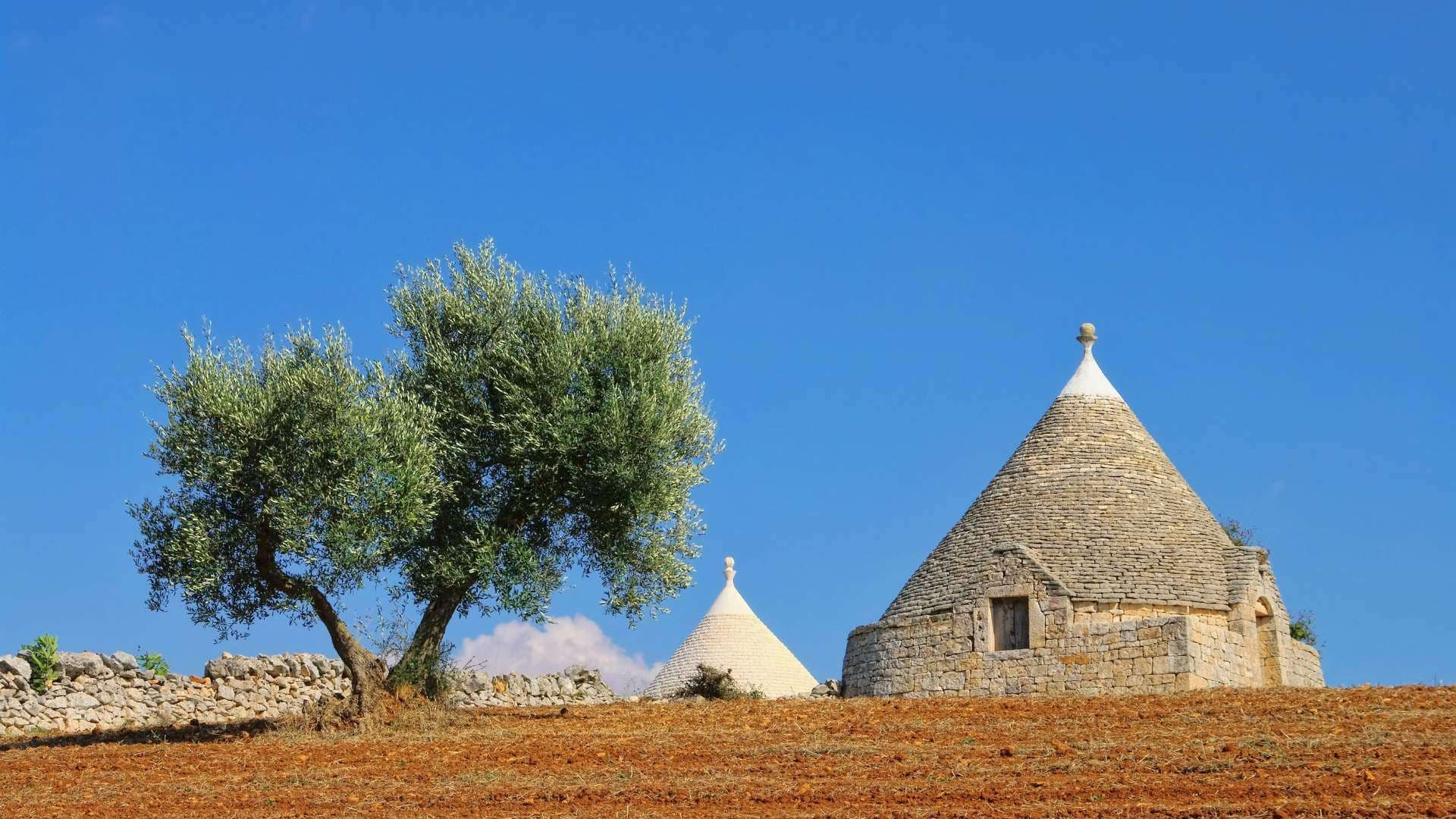
Valle d’Itria lies in central Puglia, between the Adriatic coast and the inland Murge plateau. Despite the name, it is not a dramatic valley in the alpine sense. It is a soft landscape of low hills, cultivated land, vineyards, olive groves, and historic towns built on higher ground. This makes the region especially rewarding by car, because many of its best views come from the roads between towns rather than from a single viewpoint.
The classic Valle d’Itria route includes Alberobello, Locorotondo, Martina Franca, Cisternino, and Ostuni. Nearby places such as Ceglie Messapica and Fasano are often included too, depending on the itinerary. Distances are short: the regional Itria Valley Circuit connects several of the main towns, making it easy to plan a loop rather than long out-and-back journeys. Travellers staying in Monopoli, Polignano a Mare, Bari, Brindisi, or Matera can also visit Valle d’Itria as a day trip, although staying overnight gives the area more time to reveal itself.
Why Visit Valle d’Itria?
Valle d’Itria stands out because it combines several of Puglia’s most recognisable images in one compact area. Alberobello has the trulli, Locorotondo has one of the most graceful whitewashed historic centres, Martina Franca brings baroque architecture and a more urban rhythm, Cisternino is closely associated with simple meat restaurants and evening strolls, and Ostuni offers a dramatic white city skyline rising above olive groves.
This is also one of the best areas in Puglia for slow travel. Rather than rushing from one major monument to another, the pleasure comes from moving at a measured pace: morning coffee in a small piazza, a walk through narrow lanes, a countryside lunch, an afternoon drive, and sunset from a hilltop town. Many visitors and residents agree that the roads between the towns are part of the experience, especially where trulli appear unexpectedly among orchards, vineyards, and dry-stone walls.
The Main Towns of Valle d’Itria
Alberobello
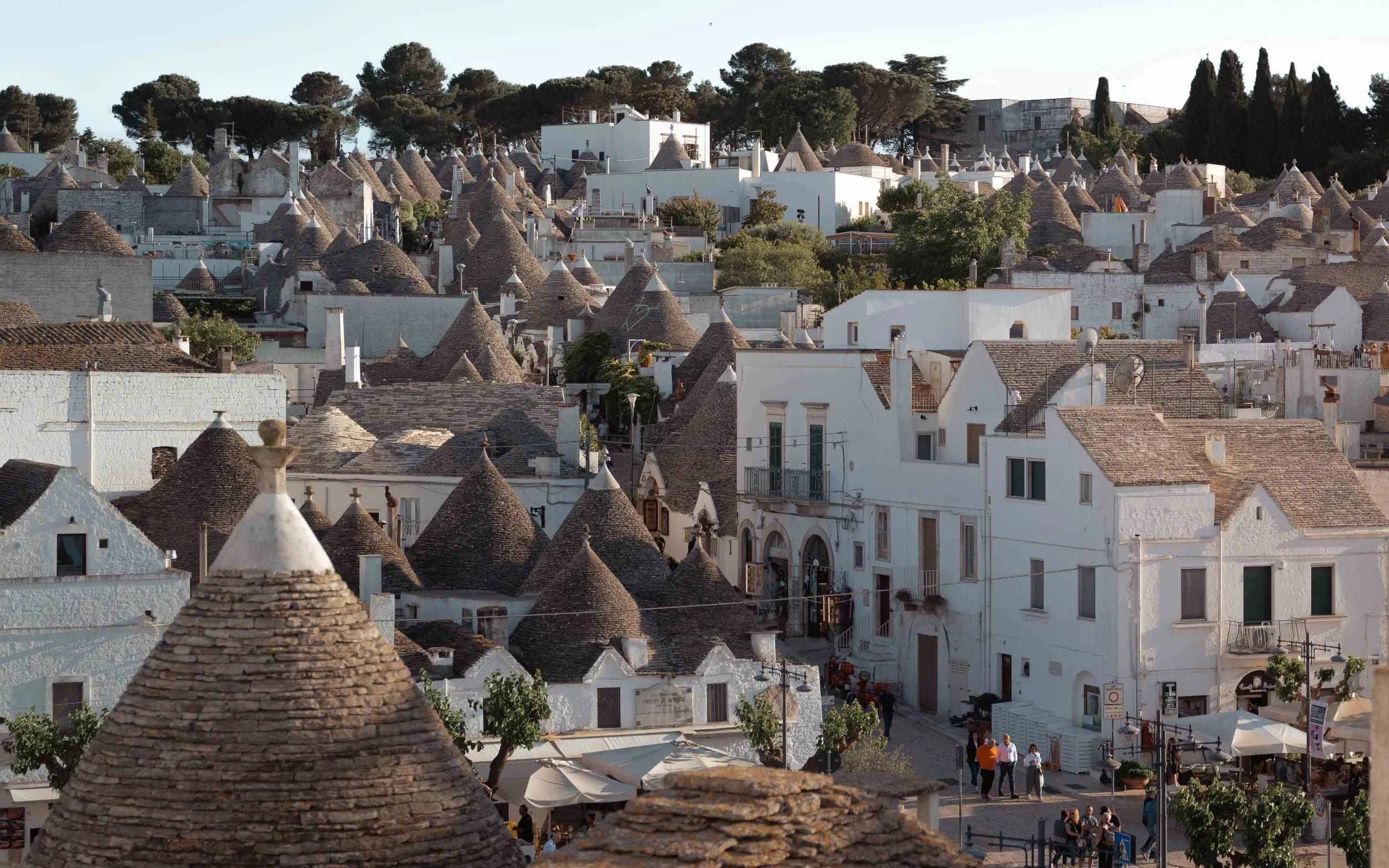
Alberobello is the most famous stop in Valle d’Itria and the town most visitors associate with trulli. The trulli of Alberobello are remarkable limestone buildings with conical roofs, built using dry-stone techniques that are deeply rooted in this part of Puglia. The most visited areas are Rione Monti and Aia Piccola. Rione Monti has the postcard views, souvenir shops, and the highest concentration of trulli, while Aia Piccola is quieter and more residential in feel.
Alberobello is popular for good reason, but it can also feel busy in high season and during the middle of the day. A more rewarding visit often comes early in the morning or later in the afternoon, when the light is softer and the streets are less crowded. It works well as a half-day stop, especially when combined with nearby Locorotondo or Martina Franca.
Locorotondo
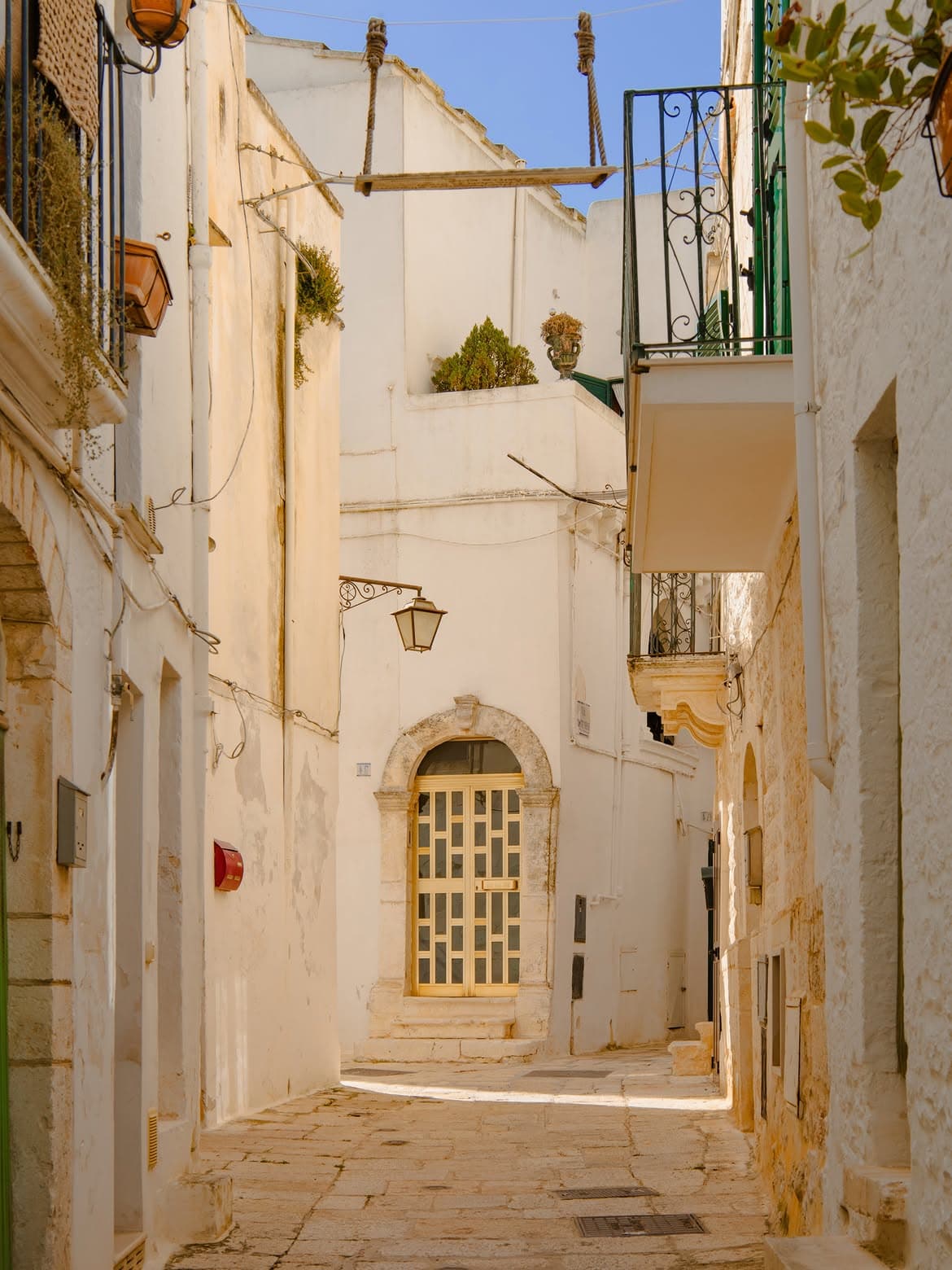
Locorotondo is widely considered one of the most elegant towns in Valle d’Itria. Its historic centre is compact, bright, and beautifully kept, with white lanes, flowered balconies, stone staircases, and views across the countryside. The town is listed among I Borghi più Belli d’Italia, and it is easy to understand why once inside the old centre.
The name refers to the town’s rounded layout, and walking here feels intuitive: follow the lanes, circle the historic core, and pause at viewpoints over the valley. Locorotondo is especially strong for travellers who want atmosphere rather than a checklist of monuments. It is close to Alberobello, so the two are often paired in one day, but Locorotondo deserves unhurried time. Late afternoon and early evening suit it particularly well, when the white stone softens and the restaurants and wine bars begin to fill.
Martina Franca
Martina Franca is larger and more complex than Locorotondo or Cisternino. It has a refined old town, elegant baroque façades, noble palazzi, and a more lived-in feel. The historic centre is a maze of lanes and small squares, with the Basilica di San Martino as one of its main architectural landmarks. Compared with Alberobello, Martina Franca is less about a single iconic image and more about layers: architecture, local life, cafés, shops, evening passeggiata, and music traditions.
It is also one of the best bases in Valle d’Itria for travellers who want a town with substance rather than a purely rural stay. From Martina Franca, it is easy to reach Locorotondo, Alberobello, Cisternino, and Ceglie Messapica by car. The town has enough restaurants, services, and cultural interest to support a longer stay, while still giving access to the countryside within minutes.
Cisternino
Cisternino is smaller, quieter, and very atmospheric, with a whitewashed old town made for wandering rather than structured sightseeing. It is often paired with Locorotondo because both towns share a compact scale and a strong sense of place. Cisternino’s lanes open onto small courtyards, arches, stairways, and viewpoints over the countryside, giving the town a relaxed, intimate character.
The town is also strongly associated with fornelli pronti, butcher restaurants where diners choose meat at the counter and have it cooked on the spot. This makes Cisternino a particularly good evening stop, especially for travellers interested in local food traditions rather than formal dining. It does not need a full day, but it rewards a slow visit. Arrive before dinner, walk the old town, pause for an aperitivo, then stay for a meal in or near the historic centre.
Ostuni
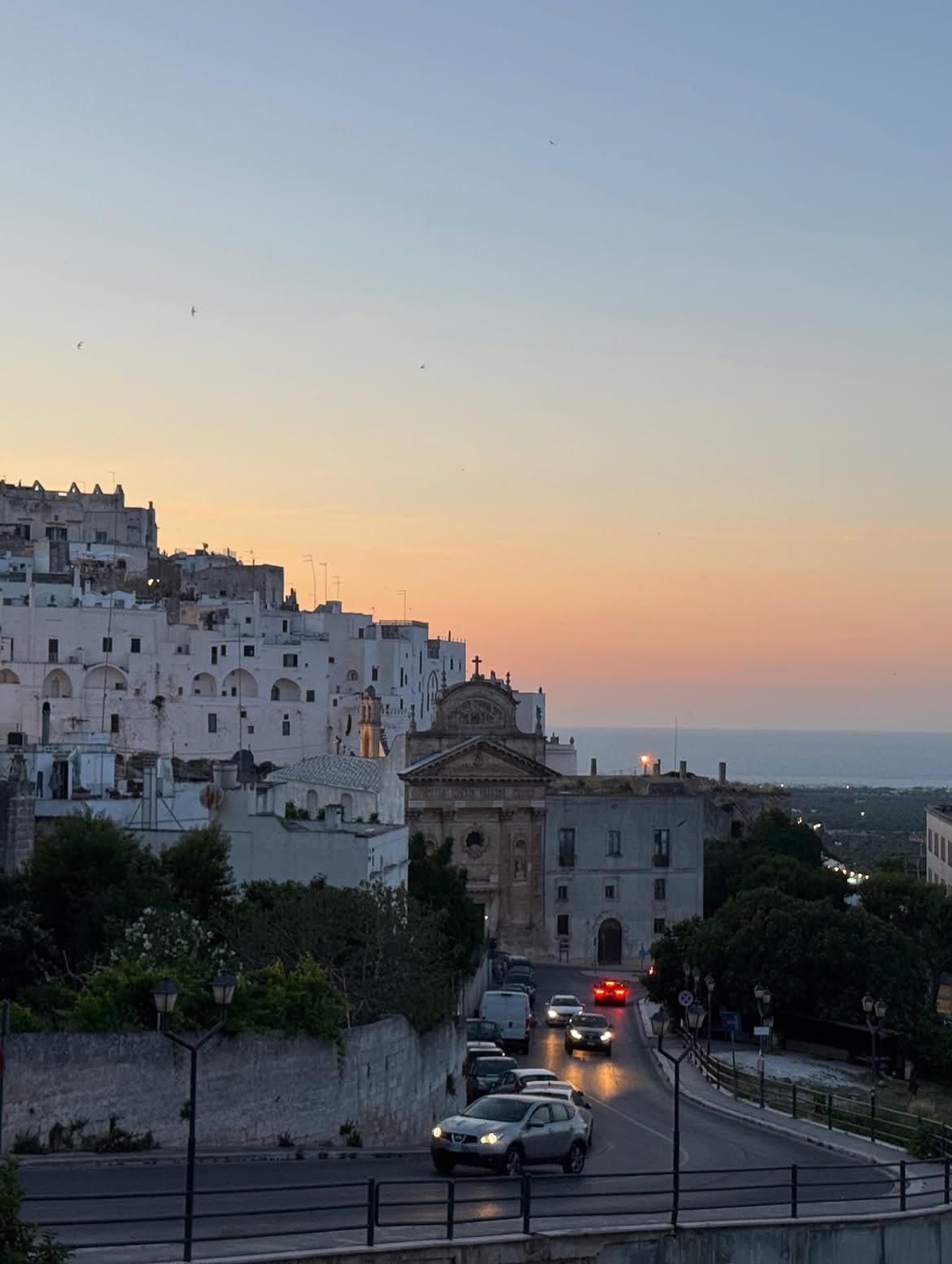
Ostuni is often called the White City and is one of the most visually striking towns near Valle d’Itria. It rises on a hill above a vast plain of olive trees, with white buildings climbing towards the cathedral and historic centre. The town belongs naturally in a Valle d’Itria itinerary, especially for travellers who want a blend of hill town views and access to the Adriatic coast.
Ostuni is larger and busier than Locorotondo or Cisternino, especially in summer. The old town is full of steps, narrow lanes, restaurants, small shops, and panoramic corners. It is beautiful at sunset, when the white façades take on warmer tones and the surrounding olive groves become part of the view. Parking and traffic can be more demanding than in smaller towns, so it is best approached with time and patience, especially during peak season.
How Many Days Do You Need in Valle d’Itria?
A rushed visit to Valle d’Itria can be done in one day, but two to four days is a much better range. With one day, focus on Alberobello and Locorotondo, possibly adding Cisternino if the day is long and you are travelling by car. With two days, add Martina Franca and Ostuni, giving each town enough time for a proper walk rather than a quick photo stop.
Three or four days allow the region to feel slower and more natural. This gives space for a countryside stay, a long lunch, a winery visit, a masseria experience, or a detour to Ceglie Messapica, Fasano, Monopoli, or the coast. Valle d’Itria is not only about seeing towns. It is about the rhythm between them: short drives, scenic roads, quiet lanes, and evenings that feel different from the daytime crowds.
Where to Stay in Valle d’Itria
The best base depends on the style of trip. Locorotondo and Cisternino suit travellers who want charm, small-scale historic centres, and a slower evening atmosphere. Martina Franca works well for those who prefer a larger town with more services, cultural depth, and year-round life. Ostuni is a strong choice for travellers who want a dramatic setting and easier access to the coast, although it can be busier.
For a countryside escape, staying in a masseria or restored trullo can be the most memorable option. These rural stays are often set among olive groves, vineyards, or fields, and they make Valle d’Itria feel less like a sequence of day trips and more like a landscape to settle into. A car is strongly recommended for this type of stay. Public transport exists between some towns, but it rarely matches the flexibility needed for countryside accommodation, restaurants outside town, or multi-stop itineraries.
Food and Wine in Valle d’Itria
Food is one of the strongest reasons to spend time in Valle d’Itria. The area is known for simple, ingredient-led cooking: handmade pasta, local cheeses, vegetables, olive oil, meat cooked over embers, and wines that reflect the inland hills. Cisternino is especially associated with butcher restaurants, while Martina Franca and Locorotondo offer a wider mix of traditional trattorie, wine bars, and more polished dining.
Wine is another important part of the experience. Locorotondo is known for white wines, while the wider area produces labels connected to native grape varieties and local traditions. The best food experiences are often not the most elaborate ones: a plate of orecchiette, grilled bombette, burrata, seasonal vegetables, or a glass of local wine can say more about the region than a complicated tasting menu. For travellers building a food-focused itinerary, Valle d’Itria pairs naturally with Ceglie Messapica and nearby coastal towns.
Best Time to Visit Valle d’Itria
Spring and early autumn are the best periods for most travellers. April, May, June, September, and early October usually offer pleasant weather, open restaurants, countryside colour, and easier walking conditions. These months are especially good for town-hopping, photography, cycling, and rural stays. Summer brings long evenings and a lively atmosphere, but also heat, higher prices, and more visitors in places like Alberobello and Ostuni.
Winter is quieter and can be rewarding for travellers who prefer local life over sightseeing crowds, but some countryside stays, restaurants, and tourist services may operate seasonally. The white towns are still beautiful in cooler months, especially on clear days, but the experience is slower and less polished. For a first visit, late spring or September offers the best balance between atmosphere, weather, and accessibility.
How to Get Around Valle d’Itria
A car is the most practical way to explore Valle d’Itria. The towns are close to one another, but the real advantage of driving is flexibility. It allows travellers to stop at viewpoints, reach countryside accommodation, visit masserie, and combine smaller towns in a single day. Roads are generally manageable, though historic centres have limited traffic zones, narrow streets, and parking areas outside the old town cores.
Travelling without a car is possible but more restrictive. Train and bus connections exist between some towns, yet they may not be frequent enough for a relaxed multi-stop itinerary. If relying on public transport, choose a base carefully and avoid overloading the day. Alberobello, Locorotondo, and Martina Franca are more realistic without a car than remote countryside stays. For short trips, taxis and private transfers can help, but they should be planned in advance rather than assumed on arrival.
Suggested Valle d’Itria Itinerary
For one day, start in Alberobello early, before the busiest hours, then continue to Locorotondo for lunch or an afternoon walk. If time allows, end in Cisternino for dinner. This creates a compact route with three very different atmospheres: trulli, panoramic white lanes, and an intimate evening food scene.
For two days, spend the first day between Alberobello, Locorotondo, and Martina Franca. On the second, visit Cisternino and Ostuni, leaving time for a countryside lunch or a coastal detour if travelling in warm weather. With three or four days, slow the pace and add a masseria stay, a winery, Ceglie Messapica, or the Adriatic coast around Monopoli and Savelletri. The strongest itineraries avoid changing accommodation too often. One well-chosen base usually works better than moving from town to town every night.
Practical Tips for Visiting Valle d’Itria
Plan around the heat in summer. Towns such as Ostuni and Martina Franca involve steps, stone lanes, and exposed squares, so mornings and late afternoons are more comfortable. Midday is better for lunch, a countryside break, or travel between towns. Comfortable shoes are essential because historic centres are paved with stone and often uneven.
Parking is usually outside the old towns, and this is normal. Do not try to drive deep into historic centres unless your accommodation has given precise instructions. Many towns have limited traffic zones, and the most enjoyable way to explore is on foot. For photography, early morning is best in Alberobello, while Locorotondo, Cisternino, and Ostuni are especially attractive in the golden light before sunset. Restaurant reservations are useful in high season, particularly for popular dinner spots and rural masserie.
FAQ
Is Valle d’Itria worth visiting?
Yes. Valle d’Itria is one of the best areas in Puglia for whitewashed towns, trulli, countryside stays, local food, and slow travel. It is especially worthwhile for travellers who want more than beaches and prefer historic centres, scenic drives, and rural atmosphere.
What is the best base for Valle d’Itria?
Martina Franca is practical for services and central access, Locorotondo is ideal for charm and views, Cisternino is good for a quieter stay, and Ostuni works well for travellers who want a dramatic hill town close to the coast. Countryside masserie are excellent if travelling by car.
Can you visit Valle d’Itria without a car?
Yes, but it is easier with a car. Public transport can connect some towns, especially Alberobello, Locorotondo, and Martina Franca, but it limits flexibility. A car is strongly recommended for countryside accommodation, multi-town itineraries, masserie, and evening meals outside town.